
Digital Guide
Collections Best Practices
Four strategies to reduce DSO, accelerate cash flow, and remove friction from the work-to-cash cycle.

The Collections Challenge Facing Law Firms Today
For most law firms, collections remains one of the most consequential — and most frustrating — parts of running a practice. Work is delivered, invoices are sent, and then the waiting begins.
Days turn into weeks, weeks into months, and realization rates quietly erode.
The numbers tell the story clearly.
88%
Average collections realization rate²
30%
Firms using technology to automate collections³
Sources: 1. Thomson Reuters Peer Monitoring Index 2010–2024; / 2. Thomson Reuters: Law Firm Rates in 2024; / 3. Thomson Reuters: LFFI Q1 2024
A 130-day average DSO signals more than slow payers. It reflects systemic friction in:
- How Invoices are Delivered
- How Payments are Made
- How Collections Teams Communicate
That friction compounds: when DSO climbs above 90 days, the likelihood of full realization drops sharply, and the resources required to chase outstanding balances increase.
This guide draws on Elite's work with law firms across the Am Law 100 and beyond to outline four proven practices for reducing DSO, improving realization, and building a collections process that works year-round — not just at year-end.
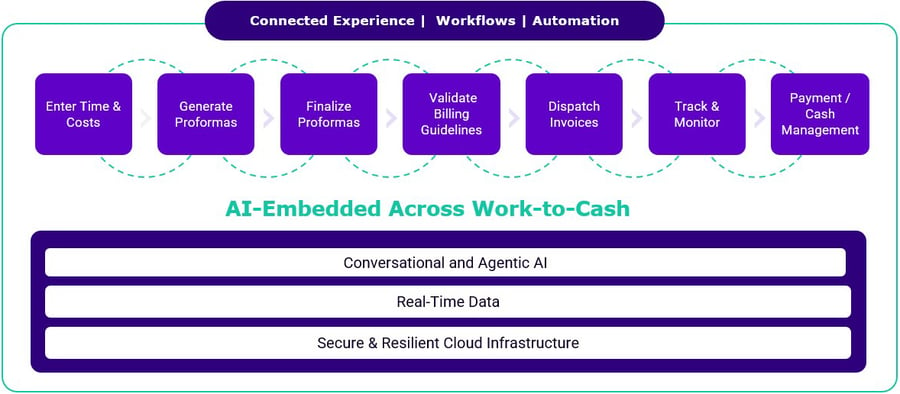
Elite's work-to-cash platform is designed to eliminate friction at every stage of the billing and collections cycle — from time capture and invoice generation through payment, reconciliation, and reporting.
Best Practice #1 — Start Collections Early
Don't let the calendar control your cash flow.
End-of-year collections pressure can be intense, but it’s a solvable problem for firms that empower their people, processes, and technology with best practices and tools.
Firms reaching out early tend to get more attention and response compared to firms that begin reach-outs in November, as they are competing with every other vendor and service provider for client attention — right as teams go on holiday and budgets lock up.
Elite works with firms to consistently improve DSO, with timing being a key differentiator for firms who outperform; this early outreach changes the dynamic entirely.
Why Early Outreach Wins
Be the Priority Invoice
Starting earlier positions your invoices ahead of the queue before year-end budget freezes take effect.
Avoid the Holiday Bottleneck
November-December outreach is the slowest due to reduced availability on both sides.
DSO Average at 130 Days
Firms that begin Q4 outreach in August or September more successful coming to year end.
More Runway Means More Options
Early contact allows time for payment plans, partial payments, and structured resolution rather than rushed demands
What to Do
Identify Aged Receivables by Client Segment in Late Q2 or Early Q3, Not Q4
Segment Outreach by Relationship, Outstanding Balance, and Historical Payment Behavior
Assign Dedicated Bandwidth to Collections, Rather Than Layering It onto Billing Team Workloads
Use Automated Reminder Cadences That Escalate Appropriately
Elite Payments supports configurable outreach workflows built into the platform.
With Elite Payments, reminder cadences and escalation workflows are built directly into the collections process — so your team focuses on resolution, not chasing.
Best Practice #2 — Provide Flexible Payment Options
Meeting clients where they are accelerates payment.
The most common reason for delayed payment is not inability — it is inconvenience or constraints. Clients facing cash flow pressures, budget cycle mismatches, or administrative friction will defer payment if the process makes it easy to do so.
Flexible payment options remove that deferral. They signal partnership rather than pressure, and they consistently produce faster, fuller recovery of outstanding balances.
What Clients Need
Card Payment Options for Clients Whose Internal Approval Processes Favor Credit or Corporate Card
Multi-Bank Payment Support so Clients Can Pay from the Account That Works Best for Them — Reducing Administrative Barriers to Payment
Trust Account Payment Capability for Matters Where Client Funds Are Held in Trust — Enabling Seamless Drawdown at the Point of Invoice
In Q1 2026, Elite expanded Elite Payments to include multi-bank and trust payment support — giving firms even more ways to meet clients' payment preferences and remove collections friction.
Why It Works
Relieving Pressure Leads to Faster Payment
Clients are more likely to engage quickly when they have options.
Payment Plans Convert Aged Receivables
Structured plans recover balances that might otherwise remain outstanding indefinitely.
It Protects Client Relationships
Flexible terms communicate respect for client circumstances, strengthening long-term retention.
Elite Payments Manages Plan Administration, Risk, & Reconciliation
The firm receives payment without absorbing credit risk.
Best practice #3 — Remove Payment Friction
Every extra step is an opportunity to delay.
Friction in the payment process is often invisible to the firm, but acutely felt by clients. Multiple system logins, unclear payment instructions, phone-based processes, and disconnected portals all create opportunities for delay — and the client rarely tells you why they haven't paid.
Removing friction is not about making it harder to decline — it is about making it impossible to find a reason to wait.
Common Sources of Payment Friction
Multiple Portals or Onboarding Steps That Require Back-and-Forth with the Collections Team
Payment Routes That Work for Some Clients but Not Others — No Card Option, No Plan Option, No ACH Fallback
Invoice Delivery That Requires the Client to Take an Action Before They Can Even View the Amount Owed
Disconnected Systems That Mean Reconciliation Takes Days and Exceptions Require Manual Resolution
The Elite Approach
Elite Payments provides a single, embedded payment experience that integrates directly into the invoice delivery workflow. Clients receive an invoice with a direct payment link — no separate portal registration, no system friction.
One Consolidated Payment Route with Support for ACH, Card, Pay-Later Plans, Multi-Bank, & Trust
Embedded Within Elite's Broader 3E Platform — so Payment Status, Reconciliation, & Reporting Are Unified
Reduces Effort for Collections Teams by Eliminating Manual Follow-Up on Payment Method Questions
Eliminating friction across the work-to-cash cycle is central to how Elite has built its platform. Every improvement compounds — less time chasing, faster cash, better visibility.
Best practice #4 — Introduce Automation
Scale your collections process without scaling your team.
Collections is repetitive by nature — reminders, follow-ups, escalations, reconciliation. When those tasks are handled manually, the capacity of your collections process is limited by the capacity of your team. Automation removes that ceiling.
Firms using technology to automate collections outperform their peers on both DSO and realization — and yet only 30% of firms currently use purpose-built automation in their collections process. That gap represents a significant competitive opportunity.
Where Automation Adds Most Value
Automated Reminder Cadences Triggered by Invoice Age, Balance Threshold, or Client Segment
Escalation Workflows That Route Exceptions to the Right Team Member Without Manual Triage
Real-Time Reconciliation Between Payment Received and Matter Balance — Eliminating Manual Porting Between Systems
Reporting and Visibility That Surface Aging Trends Before They Become Problems, Rather Than After
Implementation Without Disruption
A common barrier to automation adoption is the assumption that implementation is costly, slow, or dependent on IT resource. Elite Payments is designed to work the other way.
Low-Code and No-Code Configuration for Reminder Cadences and Escalation Rules
Native Integration with Tools Like EDICOM to Help Keep Payments Compliant
Cloud-Native Deployment Means No Infrastructure Overhead and Continuous Platform Updates
Collections Teams Can Configure and Manage Workflows Directly, Without Specialist Development Resource
Elite's platform updates in early 2026 embedded intelligence directly into the work-to-cash cycle — so automation is not a separate layer but a continuous improvement built into how the platform operates.
The End of Collections Friction
Trusted by 3 out of 4 of the Global 100
Elite is the only AI-powered SaaS platform needed to run the entire work-to-cash cycle as one connected system — from time entry through collections, payment, and reporting.
Trusted by 3 out of 4 of the Global 100, Elite eliminates the manual handoffs, disconnected systems, and administrative overhead that slow collections and erode realization. With Elite Payments, flexible options, and intelligent automation all embedded in a single platform, your firm gets paid faster — and your team spends less time making it happen.
"The greatest feedback we received once we introduced invoice automation and embedded payment options on clients' billing statements was how convenient the payment options and process has become."
- Director of Finance, Am Law 100 Firm